
 Online Business Development
 Quality Management
 Environmental Management
 Health & Safety Management
 Information Security Management
 IT Services Management
 Food Safety
 Medical Laboratories
 Design courses
 ICDL
 Cisco
 IT Security
 CompTIA
 Programing
 crafts
 Safety
 Office Management
 Human Resource Management
 Institutional Development
 RedHat
 Public Relations
 Anti - Bribery Management System
 Traffic Safety Management System
 Purchases & Warehouses
 Leadership Development
 ERP System
 Accounting
 International storing and distribution practice
 Blacksmithing
 carpentry
 Building and Industrial Electrical
 Fashion Stylist and Model Making
 Aluminum carpentry
 Automobile Diagnostic
 Modern Male’s Hairdressing
 Modern Pastry
 International Cuisine
 Caregiver
 Computer programming
 graphic design
 Bodybuilding, Fitness Hit Training
 Accounting and Management
 Plumbing and Air conditioning
 Mobile phone repair and maintenance
 Babysitter
 Office Computer Skills
 Modern Butchery
 Welding
 Plumping
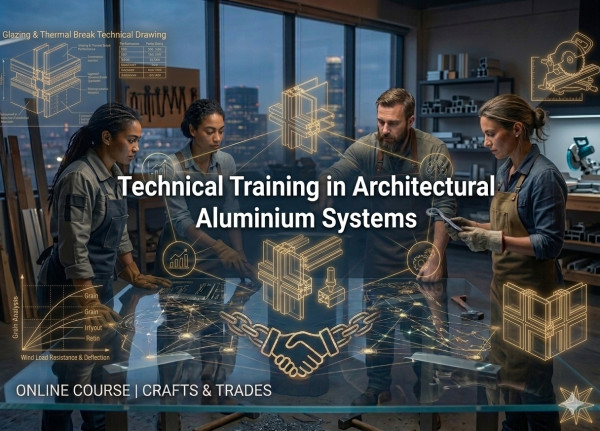
Technical Training in Architectural Aluminium SystemsAluminum carpentry / Technical Training in Architectural Aluminium Systems
| Location : Online |
who should attend?
• Aluminum fabricators and technicians looking to elevate their technical and installation skills
• Site supervisors and civil inspectors managing architectural glazing and cladding projects
• DIY enthusiasts and career switchers wanting to learn the architectural aluminum trade from scratch
• Draftsmen and estimators needing a solid practical foundation in aluminum systems and joinery
objective
• Explain the structural properties of architectural aluminium profiles, thermal break technologies, and safety codes
• Master precise cutting, punching, and assembly techniques for various window and door configurations
• Apply proper sealing, glazing, and installation methods to ensure air-tightness and structural stability
content
• Introduction to architectural aluminium: Profiles, alloys, anodizing, and powder coating standards
• Reading workshop drawings: Understanding cut lists, clearances, and hardware specifications
• Workshop machinery and tools: Safe operation of mitre saws, copy routers, and punching machines
• Fabrication of window and door systems: Sliding, hinged, and tilt-and-turn configurations
• Introduction to curtain wall systems: Stick systems, unitized systems, and structural glazing
• Glazing and weatherproofing: Selecting glass types, gaskets, setting blocks, and silicone sealants
• Installation best practices: Anchoring, leveling, thermal expansion management, and site safety
• Quality control: Testing for air/water infiltration and identifying common fabrication errors